A bathroom renovation can be one of the most rewarding upgrades in a home, but it can also interrupt daily routines if the timeline is not planned properly. Before starting, most homeowners want a clear answer to one simple question: how long will the bathroom be out of use?
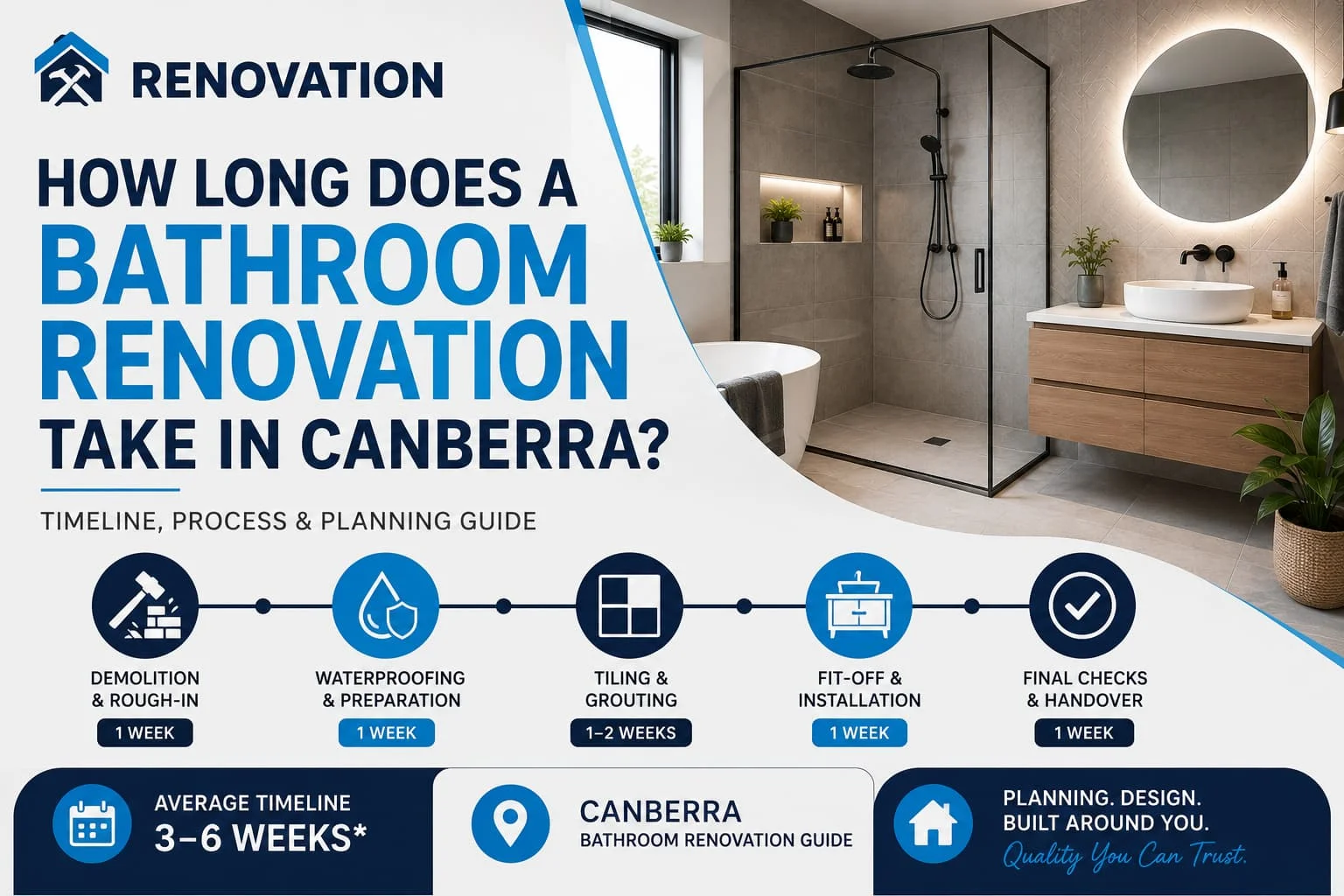
A standard bathroom renovation in Canberra usually takes around 3 to 6 weeks once construction begins. Smaller updates or compact ensuites may be completed faster, while larger bathrooms, layout changes, custom fittings, waterproofing delays, or material availability can extend the project timeline.
The full process can also include planning, design selections, quoting, ordering materials, and booking trades before construction starts. That means the total renovation journey may take longer than the on-site building work alone.
Quick Answer: Average Bathroom Renovation Timeline in Canberra
The average bathroom renovation timeline depends on the size of the space, the condition of the existing bathroom, and how much work is involved. A simple refresh may only need a few weeks, while a full bathroom renovation with new plumbing, tiling, waterproofing, and custom fixtures can take longer.
| Renovation Type | Estimated Timeline |
|---|---|
| Small bathroom refresh | 2 to 3 weeks |
| Standard bathroom renovation | 3 to 6 weeks |
| Ensuite renovation | 2 to 5 weeks |
| Full custom bathroom renovation | 5 to 8+ weeks |
| Bathroom with layout changes | 6+ weeks |
Planning and selections before construction may take another 1 to 4 weeks, especially if you are choosing tiles, vanities, tapware, lighting, shower screens, and custom cabinetry. The earlier these decisions are made, the easier it is to keep the bathroom renovation process on schedule.
Why Bathroom Renovation Timelines Can Vary
No two bathroom renovations are exactly the same. A renovation timeline can change based on the condition of the home, the design choices, the availability of materials, and how well each trade is coordinated. In Canberra, homeowners often renovate bathrooms in older homes, family houses, apartments, and compact ensuites, so the scope can vary a lot from one project to another.
Size of the Bathroom
The size of the bathroom has a direct impact on the timeline. A small bathroom or ensuite may be quicker to renovate because there is less tiling, fewer fixtures, and a smaller work area. A larger main bathroom usually needs more time for demolition, waterproofing, tiling, cabinetry, plumbing, and final installation.
A bigger bathroom may also involve more design decisions, such as a freestanding bath, double vanity, walk-in shower, feature wall, larger mirror, or extra storage. These choices can improve the final result, but they also add more detail to the renovation schedule.
Existing Bathroom Condition
The condition of the current bathroom can affect how quickly work can move forward. If the existing space is in good condition, the renovation may follow a more predictable schedule. If there is water damage, poor ventilation, old plumbing, damaged flooring, or hidden wall issues, extra repair work may be needed before the new bathroom can be installed.
This is one reason a proper site inspection is important. It helps identify possible problems early and gives the renovation team a clearer idea of what needs to be done before construction begins.
Layout Changes
A bathroom renovation is usually faster when the existing layout stays the same. Keeping the toilet, shower, bath, and vanity in similar positions can reduce the amount of plumbing and structural work required.
If the layout is changing, the project may take longer. Moving plumbing, changing drainage points, adjusting walls, or creating a new shower area requires more planning and trade coordination. These changes can be worthwhile, especially when the current layout does not work well, but they should be included in the timeline from the beginning.
Plumbing and Electrical Requirements
Plumbing and electrical work are important parts of a bathroom renovation. New taps, toilets, showers, vanities, lighting, exhaust fans, power points, heated towel rails, and underfloor heating may all require licensed trades.
If the renovation includes upgrades or changes to existing services, the schedule needs to allow time for rough-in work before walls and floors are finished. Careful coordination at this stage helps prevent delays later in the project.
Waterproofing and Drying Times
Waterproofing is one of the most important stages in any Australian bathroom renovation. It protects the structure of the home from moisture damage and helps prevent future leaks.
This stage cannot be rushed. The waterproofing system needs to be applied correctly and allowed to dry before tiling begins. If the drying time is ignored or the work is not completed properly, it can lead to serious issues later. A reliable bathroom renovation timeline should always allow enough time for waterproofing and preparation.
Tile and Fixture Availability
Tiles, vanities, tapware, mirrors, shower screens, toilets, and fittings can all affect the renovation schedule. If everything is selected and ordered before construction starts, the project can move more smoothly. If materials are delayed or changed during the renovation, the timeline may be extended.
Custom items such as made-to-measure vanities, frameless shower screens, custom mirrors, or special-order tiles often need additional lead time. For this reason, early material selection is one of the best ways to avoid unnecessary delays.
Trade Scheduling and Project Management
A bathroom renovation involves several trades working in the right order. Demolition, plumbing, electrical, waterproofing, tiling, cabinetry, shower screen installation, and final fit-off all need to be coordinated properly.
Poor scheduling can create gaps between stages. Strong project management keeps the work moving, reduces downtime, and helps homeowners understand what is happening at each stage. This is especially important for busy households where bathroom access, noise, dust, and daily routines need to be planned around the renovation.
The Bathroom Renovation Timeline: Step-by-Step
A well-managed bathroom renovation follows a clear process. Each stage prepares the space for the next one, and skipping steps can cause quality problems or delays. Here is what a typical bathroom renovation timeline in Canberra may look like.
Step 1: Initial Consultation and Site Inspection
The process usually begins with an in-home consultation. This is where the renovation team learns what the homeowner wants to achieve, how the bathroom is currently used, and what problems need to be solved.
During the site inspection, the space is measured and the existing layout is reviewed. The team may look at the position of the shower, toilet, vanity, plumbing points, ventilation, storage, lighting, and access. This stage also helps identify whether the bathroom needs a simple upgrade or a more complete renovation.
Budget is also discussed early. A clear budget helps guide decisions around tiles, fixtures, vanities, fittings, and the overall scope of work.
Step 2: Design, Planning, and Material Selection
Once the goals are clear, the planning stage begins. This is where the bathroom layout, tile style, vanity, shower screen, tapware, lighting, storage, mirror, and fittings are selected.
Good planning makes a major difference to both the result and the timeline. A well-designed bathroom should feel comfortable, practical, and easy to maintain. It should also suit the way the household uses the space every day.
Choosing materials early helps avoid delays once construction starts. If tiles, fixtures, or fittings are not available when needed, trades may need to pause or reschedule.
Step 3: Quote Approval and Scheduling
After the design and scope are confirmed, the quote can be finalised. This should include the work involved, materials, trade requirements, and expected timeline.
Once the quote is approved, the project can be scheduled. Trades are booked, materials are ordered, and the start date is confirmed. This stage is important because a bathroom renovation depends on several trades arriving in the correct order.
Clear scheduling gives homeowners a better idea of when the bathroom will be unavailable and what to expect during the renovation.
Step 4: Demolition and Site Preparation
Demolition is where the old bathroom starts to come out. Existing tiles, vanity, shower screen, toilet, tapware, fittings, and damaged materials may be removed depending on the scope of the renovation.
The walls and floor are then prepared for the next stages. This may include checking surfaces, removing waste, preparing the work area, and making sure the space is ready for plumbing, electrical, waterproofing, and tiling.
Dust and waste management matter during this stage. A clean and organised site helps the renovation run more smoothly and reduces disruption inside the home.
Step 5: Plumbing, Electrical, and Rough-In Work
The rough-in stage prepares the bathroom services before walls and floors are finished. Plumbing may be moved, upgraded, or adjusted for the shower, vanity, bath, toilet, or tapware.
Electrical work may include lighting, power points, exhaust fans, heated towel rails, mirror lighting, or underfloor heating if included in the design. This stage needs to be completed carefully because these services sit behind walls, floors, and finished surfaces.
Good planning during rough-in helps prevent expensive changes later.
Step 6: Waterproofing
Waterproofing is a critical stage in the bathroom renovation process. Australian bathrooms are exposed to daily moisture, so proper waterproofing protects the home from leaks, mould, and long-term structural damage.
The waterproofing system must be applied correctly and allowed to dry before tiling begins. This stage should never be rushed just to shorten the timeline. Poor waterproofing can lead to costly repairs, damaged surfaces, and future renovation problems.
A professional bathroom renovation schedule should always include proper preparation, application, and drying time for waterproofing.
Step 7: Tiling and Grouting
Tiling is one of the most visible parts of the renovation, but it is also one of the most time-sensitive. Floor tiles, wall tiles, feature tiles, niches, and tile patterns all affect how long this stage takes.
Large-format tiles, detailed patterns, full-height tiling, and complex layouts can take longer because they require more careful cutting, levelling, and setting. Once tiles are installed, grouting and curing time are also needed before the bathroom can move to the final fit-off stage.
Quality tiling takes patience. It has a major impact on the look, durability, and finish of the bathroom.
Step 8: Vanity, Fixtures, Shower Screen, and Final Fit-Off
After tiling and grouting are complete, the bathroom starts to come together. The vanity, toilet, taps, shower fittings, mirror, accessories, towel rails, and shower screen are installed during the final fit-off stage.
This is also when the smaller details are completed. These details may include silicone sealing, cabinetry adjustments, lighting fixtures, handles, shelves, and final accessories.
The bathroom may look almost finished at this point, but final checks are still needed before handover.
Step 9: Final Checks, Cleaning, and Handover
The final stage includes quality checks, cleaning, and a walkthrough with the homeowner. The renovation team reviews the finish, checks that fixtures are working properly, and makes sure the space is ready for use.
Any small adjustments can be handled before the project is completed. A proper handover gives homeowners confidence that the bathroom has been finished carefully and that the renovation meets the agreed scope.
Example Week-by-Week Bathroom Renovation Schedule
A standard bathroom renovation in Canberra often follows a weekly structure, although every project is different. The schedule below gives homeowners a general idea of what may happen once construction begins.
Week 1: Demolition and Rough-In
The first week usually includes removing the old bathroom, preparing the site, and completing rough-in plumbing and electrical work. If the existing bathroom has hidden damage, this is often when it becomes visible.
Week 2: Waterproofing and Preparation
During the second week, the bathroom is prepared for waterproofing. Waterproofing is applied and given time to dry properly. This week may also include surface preparation before tiling begins.
Week 3: Tiling and Grouting
The third week is often focused on tiling. Floor and wall tiles are installed, followed by grouting and curing time. More detailed tile designs can extend this stage.
Week 4: Fit-Off and Finishing
By week four, the bathroom usually moves into final installation. The vanity, toilet, tapware, shower fittings, mirror, accessories, and shower screen are installed. Final sealing, cleaning, and quality checks also take place.
Weeks 5 to 6: Custom Work or Extra Adjustments
Some bathroom renovations need extra time for custom cabinetry, special-order shower screens, layout changes, extra tiling, or unexpected repairs. Larger bathrooms and more detailed renovations may continue into weeks five or six.
Timelines are estimates and depend on the project scope, material availability, trade scheduling, and the condition of the existing bathroom.
What Can Delay a Bathroom Renovation?
Even with good planning, a bathroom renovation can sometimes take longer than expected. Some delays happen because of choices made during the project, while others are only discovered once the old bathroom is removed. The best way to manage delays is to understand them early and plan with a realistic timeline.
Late Material Selections
Material selections should be completed before construction begins wherever possible. Tiles, tapware, vanities, shower screens, mirrors, lighting, and accessories all need to be available at the right stage of the renovation.
If selections are left too late, trades may be ready to continue but the materials may not be on site. This can create gaps in the schedule and push the completion date back. Choosing products early also gives homeowners more time to compare styles, finishes, and prices without feeling rushed.
Custom Shower Screens or Vanities
Custom items often add time to a bathroom renovation. A made-to-measure vanity, frameless shower screen, custom mirror, recessed cabinet, or special storage unit may need to be measured, manufactured, delivered, and installed after other stages are complete.
These features can make the bathroom more practical and refined, but they should be allowed for in the timeline. If a custom shower screen cannot be measured until tiling is finished, installation may happen later than standard fittings.
Hidden Water Damage
Hidden water damage is one of the most common issues found during bathroom demolition. Old leaks, failed waterproofing, damp flooring, mould, or damaged wall framing may not be visible until tiles, cabinetry, or wall linings are removed.
This type of problem should not be ignored. Covering over water damage can lead to bigger issues later. Repairing the area properly may add time, but it protects the quality and lifespan of the new bathroom.
Structural Repairs
Some bathrooms need more than cosmetic work. If the floor is uneven, walls are damaged, framing has moved, or previous renovation work was poorly completed, structural repairs may be required before the new bathroom can be built.
These repairs can affect plumbing, tiling, waterproofing, and cabinetry installation. A careful site inspection can help identify some risks early, but not every issue is visible before demolition begins.
Plumbing Changes
Moving plumbing points can extend the bathroom renovation timeline. Relocating a shower, toilet, vanity, or bath usually requires more labour and planning than replacing fixtures in the same position.
Plumbing changes may also affect the floor, wall framing, drainage, waterproofing, and tile layout. This does not mean layout changes should be avoided, but they should be planned properly before the renovation starts.
Poor Trade Coordination
A bathroom renovation depends on several trades working in the correct order. If one stage is delayed, the next trade may need to be rescheduled. For example, tiling cannot start until waterproofing is complete, and final fit-off cannot happen until tiling and grouting are ready.
Good project management helps reduce downtime between stages. It also gives homeowners clearer updates, so they know what is happening and when the bathroom is likely to be completed.
Weather or Supplier Delays
Most bathroom renovation work happens indoors, but supplier delays can still affect the schedule. Tiles, fixtures, vanities, tapware, and shower screens may be delayed due to stock issues, delivery timing, or custom manufacturing.
Weather may also affect deliveries, access, outdoor cutting areas, or work that depends on transport and site conditions. These delays are not always in the renovator’s control, but early ordering and clear scheduling can reduce the risk.
How to Keep Your Bathroom Renovation on Schedule
A smooth bathroom renovation starts before demolition. The more decisions that are made before construction begins, the easier it is for the project to move without unnecessary pauses.
Choose materials early. Tiles, tapware, vanity style, shower screen type, fittings, lighting, mirror, and storage options should be selected before work starts where possible. This allows the renovation team to check availability and order materials on time.
Finalise the layout before construction begins. Moving fixtures during the project can affect plumbing, electrical work, waterproofing, tiling, and cabinetry. A clear layout helps every trade understand what needs to happen.
Avoid mid-project changes unless they are necessary. It is normal to notice new ideas once work begins, but changes can affect costs and timelines. If a change is needed, it should be discussed clearly before work continues.
Work with experienced renovators who understand bathroom sequencing. A bathroom is not just a decorative space. It needs correct waterproofing, safe electrical work, reliable plumbing, accurate tiling, proper ventilation, and careful finishing.
Clear communication also makes a major difference. Homeowners should know who to contact, when decisions are needed, and what stage the project is at. Delayed approvals can slow the renovation, especially when quotes, selections, or custom products are waiting for confirmation.
If the home has only one bathroom, arrange backup bathroom access if possible. This may be with family, neighbours, or another temporary arrangement. Planning this early helps reduce stress while the bathroom is out of use.
Do You Need to Move Out During a Bathroom Renovation?
Most homeowners do not need to move out during a bathroom renovation, especially if the home has another working bathroom. The renovated bathroom will usually be out of use once demolition begins, but daily life can often continue with some planning.
One-bathroom homes need more preparation. If there is no second bathroom, homeowners should discuss access, water shut-offs, work hours, and the expected schedule before the project begins. In some cases, it may be more comfortable to stay elsewhere during the most disruptive stages.
Noise, dust, and trade movement are normal during renovation work. A professional team should keep the site organised and manage waste properly, but homeowners should still expect some disruption. Protecting nearby areas, clearing personal items, and planning around busy family routines can make the process easier.
Water may also need to be turned off at certain times for plumbing work. These interruptions are usually planned in advance, so homeowners can prepare around them.
How Long Does an Ensuite Renovation Take?
An ensuite renovation usually takes around 2 to 5 weeks, depending on the size of the space and the scope of work. A small ensuite may be faster than a large main bathroom, but compact spaces can still require careful planning.
Ensuites often need smart storage, efficient layouts, good lighting, and precise waterproofing. Because the space is smaller, every fixture needs to be placed carefully. A wall-hung vanity, recessed shelf, frameless shower screen, or custom mirror can improve the result, but custom features may add time.
If the layout stays mostly the same, the renovation may move faster. If plumbing changes, tiling details, custom cabinetry, or special-order fixtures are included, the timeline may be closer to the longer end of the range.
How Long Does a Main Bathroom Renovation Take?
A main bathroom renovation usually takes around 3 to 6 weeks once construction begins. Main bathrooms often involve more fixtures and more daily use, especially in family homes.
A main bathroom may include a bath, shower, vanity, toilet, mirror, lighting, ventilation, storage, and floor-to-ceiling tiling. Each of these elements needs to be planned and installed in the correct order.
Because this bathroom is often used by more people, homeowners should plan carefully before work starts. If there is another bathroom in the home, the renovation may be easier to manage. If not, temporary bathroom access should be arranged before demolition begins.
How Long Does a Laundry Renovation Take?
Laundry renovations are often shorter than full bathroom renovations, especially when the existing plumbing and appliance positions stay the same. However, the final timeline still depends on the scope of work.
A simple laundry upgrade may involve new cabinetry, benchtops, storage, tiling, and improved appliance layout. A more detailed laundry renovation may include plumbing changes, custom cabinetry, new flooring, extra storage, and improved ventilation.
Even though a laundry may seem simpler than a bathroom, it still needs practical planning. Storage, appliance access, bench space, and moisture-resistant materials all affect how useful the space will be after renovation.
When Should You Book a Bathroom Renovation in Canberra?
It is best to book a bathroom renovation before the existing bathroom becomes difficult to use. Waiting until there is serious leaking, damaged tiles, mould, poor ventilation, or failing fixtures can make the project more urgent and sometimes more expensive.
Booking early gives you more time to plan the layout, choose materials, approve the quote, and secure a suitable renovation date. It also helps avoid rushed decisions, especially when custom items or special-order materials are involved.
If you are renovating before selling a home, hosting family, or preparing for a busy period, allow time for both planning and construction. A realistic schedule gives the renovation team enough time to do the work properly and gives you a better experience from start to finish.
Final Thoughts
Most bathroom renovations in Canberra take around 3 to 6 weeks on site, but the final timeline depends on the size of the bathroom, the existing condition, the layout, material availability, waterproofing, tiling, and trade coordination.
Good planning is the key to reducing delays. When the layout is finalised early, materials are selected before construction, and the renovation is managed properly, the process becomes clearer and less stressful.
A well-managed renovation does more than update the bathroom. It gives homeowners confidence that each stage has been handled carefully, from consultation and planning through to final cleaning and handover.
If you are planning a bathroom, ensuite, or laundry renovation in Canberra, Style Bathroom Renovation can help you understand your options, plan the timeline, and prepare for each stage of the project. To get started, request a consultation through the free renovation quote page.
FAQs
How long does a bathroom renovation take in Canberra?
Most bathroom renovations in Canberra take around 3 to 6 weeks once construction begins. The timeline depends on the size of the bathroom, the existing condition, layout changes, materials, waterproofing, tiling, and project complexity.
Can a bathroom renovation be completed in 2 weeks?
A very small or simple bathroom refresh may be completed in around 2 weeks, but most full bathroom renovations need more time for demolition, plumbing, waterproofing, tiling, installation, finishing, and final checks.
What part of a bathroom renovation takes the longest?
Tiling, waterproofing, custom fittings, and trade coordination often take the most time. These stages need to be completed carefully because they affect the quality, safety, durability, and long-term performance of the bathroom.
Can I use my bathroom during renovation?
Usually, no. Once demolition starts, the bathroom being renovated will be out of use until the work is completed and checked. If the home has only one bathroom, temporary access should be planned before construction begins.
How can I avoid renovation delays?
You can reduce delays by choosing materials early, finalising the layout before construction begins, avoiding major mid-project changes, approving quotes and selections quickly, and working with a renovation team that manages trades and scheduling properly.